Tesla Is Not A Car Company

Tesla may be a car company today, but Tesla won’t be a car company in 15 years. Rather, Tesla will be a full stack, vertically integrated clean energy company. They may still produce cars, but cars will represent a fraction of total profits.

For a sense of scale, consider that Tesla generated $7B of revenue in 2016. Of that, Tesla does not even break out non-automotive revenue, meaning that their battery/solar business today is small fraction of total sales.

To substantiate the bold assertion above, let’s understand why Tesla exists. The easy way is to ask Elon Musk directly. He recently updated Tesla’s official mission statement from [emphasis mine]:

Tesla’s mission is to accelerate the world’s transition to sustainable transport.

To:

Tesla’s mission is to accelerate the world’s transition to sustainable energy.

Also, Tesla recently renamed itself from Tesla Motors to Tesla.

The long answer is that Musk has been telling us this for a while. If you want a mega-scale view of how Musk thinks, and why/how he started SpaceX and Tesla, check out this 6-part, 100,000 word expose on Musk and his companies. Here’s the part about Tesla, which dives into the history of the global energy industry, climate change, and how Tesla came to be.

So how is Tesla going to pivot from being “just” a car manufacturer into a full-fledged, full stack sustainable energy company?

Tesla’s Master Plan

Everyone knows about the idea of economies of scale in manufacturing. This is the key to future. Musk has talked about the importance of scale in battery manufacturing, but the importance of scale is even more obvious when you look at Musk’s master plan for Tesla.

Here’s part 1 from 2006. The short version:

  1. Build sports car
  2. Use that money to build an affordable car
  3. Use that money to build an even more affordable car
  4. While doing above, also provide zero emission electric power generation options

And here’s part 2 from 2016. The short version:

1. Create stunning solar roofs with seamlessly integrated battery storage

2. Expand the electric vehicle product line to address all major segments

3. Develop a self-driving capability that is 10X safer than manual via massive fleet learning

4. Enable your car to make money for you when you aren’t using it

The underlying theme across all 8 of these bullets, except perhaps the last, is that each drives scale of battery production. This theme is obvious in part 1, bullets 1–3. I’ll come back to part 1, bullet 4 and part 2, bullet 1 in a bit. Let’s examine part 2, bullets 2–3.

At first, many were surprised when Tesla announced a semi, pickup, and other consumer vehicles. But in the context of Tesla’s grand mission, this makes perfect sense. It seems unlikely manufacturers in these other segments were contemplating electric vehicles. Per Tesla’s mission to accelerate the world’s transition to sustainable energy, Tesla wants to catalyze other manufacturers in these other automotive spaces to go electric faster.

Self-driving is also incredibly important to the future of batteries. Once you can call a self-driving Uber/Lyft, the cost of transportation will fall ~75% (current driver take-rate), and probably 85–90% in the long run as cars are re-engineered to be designed as taxis first. Many people will sell their cars when this happens, and rely exclusively on self-driving cars for daily transportation. This may increase transportation use in aggregate, but it will accelerate the percentage of trips made using electric rather than internal combustion engines.

Self-driving cars and electric are self-reinforcing in the long run. Electric vehicles have somewhere on the order of 100 moving parts. Internal combustion engines have somewhere on the order of 10,000 moving parts. Self-driving vehicles are going to be on the road 24/7 except charging time, meaning that reducing maintenance complexity will be paramount. Given the dramatically lower number of moving parts, the best taxis will be driven by electric motors, not internal combustion.

Driving The Industry Towards Electric

Tesla has by far the cheapest battery technology in the world. Tesla just announced that it has achieved $125/kWh at the Gigafactory 1 in Nevada. Meanwhile, GM is targeting $100/kWh by 2022. Tesla is multiple years ahead of GM in this front, despite an approximate 10x difference in resources.

Tesla doesn’t want to limit the scale of battery manufacturing to the number of cars it can produce. So Tesla is selling its batteries to other car manufacturers. This is pretty astonishing. Tesla has developed a material technology advantage over its direct competitors. Rather than using that to differentiate its product, Tesla is selling that technology to its competitors! This is all in the interest of driving scale. Tesla knows it will never produce cars for everyone, so it instead decided to produce batteries for all automakers. Scale, scale, scale.

The desire for scale goes even further. In 2014, Tesla promised that it wouldn’t sue anyone who violated its patents. Despite investing so much to differentiate itself, Tesla instead decided to encourage other manufacturers to copy Tesla, in hopes that other manufacturers would get electric vehicles onto the road more quickly.

Lastly, Musk has recently been talking about offering up an entire car factory as a product to other car manufacturers. In Tesla’s 2016 annual shareholders meeting, Musk said:

“We realized that the true problem, the true difficulty, and where the greatest potential is — is building the machine that makes the machine. In other words, it’s building the factory. I’m really thinking of the factory like a product.”

This was the basis of Tesla’s recent acquisition of Grohmann Engineering. Grohmann already supplies virtually all of the major auto companies. Tesla intends to use leverage these relationships and Grohmann’s expertise to scale out the process of building “the machine that builds the machine.”

Looking at these three decisions, it’s clear that Tesla wants to kill the internal combustion engine as fast as possible. They are literally giving away hundreds of millions of dollars of R&D for free to other auto manufacturers. And they’re going out of their way to product-ize electric-car-manufacturing-facilities for other auto manufacturers.

But there is a much bigger use case for batteries than cars.

Batteries Will Power Everything

Remember the master plan, part 1, bullet 4 and part 2, bullet 1? Most sustainable energy sources cannot produce energy 24/7 — solar, wind, ocean waves, etc. Contrast this to a coal plant, which can burn coal 24/7. This means that everything — residential and commercial — that consumes energy will need batteries in a true sustainable energy future.

Tesla’s solution to this problem? The residential and commercial Power Walland Power Pack, respectively. The commercial-use Power Pack can scale out linearly with no efficiency loss. Businesses can buy thousands of Power Packs and literally just put them in a line:

Let’s get a sense for the scale of this. The diagram below shows how energy is produced and consumed globally. Transportation represents about 28% of global energy consumption.

Tesla’s vision is simply batteries everywhere, for everything, all the time. And that means Tesla is going to need to produce a lot of batteries.

This explains why Tesla’s mission is so ambitious. There isn’t a good middle ground here. If you’re going to accelerate the transition to sustainable energy, then you need to drive battery scale as fast as possible and give away all the secrets for everyone else to adopt batteries quickly and easily. And that’s exactly what Tesla is doing. This isn’t just a function of Musk’s personal ambition. Giving away patents, selling to competitors, moving to autonomy, and selling batteries for all conceivable purposes is the most efficient and effective path towards a future of sustainable energy.

So basically, Tesla’s strategy can be shown like this:

It’s a virtuous cycle. And Tesla already has a large and growing lead. The global energy industry is on the order of trillions of dollars of revenue. Tesla wants to get us there faster, and in the process generate revenue from every piece of the ecosystem — generation, storage, and transportation.

Musk Is Copying From The Best

The diagram above is mine, but it’s not original. It’s inspired by a diagram that Bezos reportedly drew on a napkin once regarding Amazon’s retail business:

Amazon could have raised prices and maximized short-term profits years ago. Wall Street would have cheered on the move. But instead, Bezos executed towards a much larger vision: to generate revenue on every ecommerce transaction on the Internet. He realized that he would never be able to own all the world’s inventory and price it competitively. So instead, he set out to commoditize all the infrastructure that power ecommerce.

Today, Amazon owns the top of the funnel — customer discovery and search. People instinctively go to Amazon to buy many items. Most of the items listed on an Amazon search page are not actually owned by Amazon. Instead, they’re owned by 3rd party sellers. Amazon operates a marketplace in this regard. Amazon does own some of its own inventory, but an increasing percentage of its business is selling other people’s inventory.

But those inventory items sit in Amazon’s warehouses. Amazon charges sellers to store their items in Amazon’s warehouses, and for fulfilling orders — putting items in boxes and shipping them.

Today it’s widely recognized that Amazon is going into shipping, the final frontier to own the entire customer experience from end-to-end.

If you’re a merchant who wants to sell online today, you can choose to manage your own inventory and shipping, and hope you can drive search traffic or product discovery in some other way. Or you can go to Amazon, let them store and ship your stuff for you, and receive all of the search traffic that comes from Amazon.

The more sellers agree to this, the more scale-advantages Amazon receives as it can amortize its enormous fixed costs over an increasingly large number of transactions. It’s virtually impossible to build a more efficient logistics and fulfillment system than Amazon. Scale is everything. Amazon is leveraging that to try to take a slice of every online transaction on the Internet.

You can say the same thing about Amazon Web Services. Amazon doesn’t care what consumer or business applications are out there, or what they do, or who they’re made by. Amazon just wants to take a cut on every computing transaction in the world.

Scale, Scale, Scale

This is the key to understanding Tesla. Global energy markets are astronomically large. Sustainable energy sources cannot produce energy 24/7 in a given location. Tesla is aiming to provide batteries and solar production to everyone as cost effectively as possible. And the key to a sustainable future is scale. Everything Tesla does can be looked at through a supply or demand-side lens:

On the demand side, Tesla has been working to produce affordable electric cars, along with self-driving. Cost is key to get consumers to drive electric vehicles.

On the supply side, Tesla is giving away whatever it can, and actively trying to sell its battery products and manufacturing know-how to help other manufacturers get to a sustainable future as quickly as possible.

A hundred years from now, we’ll all look back and think “duh.” Obviously scale was key. Tesla is catalyzing and capitalizing on what will be the largest economic and technology shift of our lifetimes. This is bigger than IT, tech, AI, the Internet, blockchains, or any other buzzword. Everything runs on electricity, and Tesla is going to radically alter how electricity is produced and consumed around the world.

Side note: Tesla isn’t getting into wind or ocean power. These two forms of energy generation are intrinsically regional. But solar is global. Every house and business is bathed in sunlight everyday. There’s no reason that every roof can’t have a solar panel on it. That’s why in addition to batteries, Tesla is pursuing solar. That’s why Tesla bought Solar City.

Spectacles and $SNAP's $20B Valuation

Some quick numbers:

2016 Revenue: $515M (up about 6x year over year due to artificially restricted advertising revenue prior to 2016)

2016 Expenses: $919M

2016 Operating Loss: $404M

To justify a $20B valuation, the market is suggesting that, at some point in the future, Snap would need to generate financials that look something like this (assuming no discount for risk/time):

Revenue: $10B

Operating margin: 20%

Operating profit: $2B

P/E multiple: 10x

Growing revenues and profits by about 10% / year each

I don’t see any way Snap’s current business can achieve these numbers. Revenue needs to grow 20x, and margins must expand dramatically. I won’t dive into cost structure in this blog post, but let’s think through how Snap could grow revenue 20x.

Snap’s revenue is a function of two numbers: number of users, and average revenue per user (ARPU). In order to achieve 20x growth, Snap needs grow both of those metrics 4–5x. Let’s look at each figure.

User Growth

Snap’s user growth came to a near stop after Instagram launched a direct clone called Stories in September of 2016:

Snap’s daily active users grew just 3% in Q4 2016. At its current growth rate, it will take Snap 47 quarters = 141 months = 11.75 years to grow its user base 4x. It’s possible that growth could accelerate in the future, but given the law of large numbers and fierce and unrelenting competition from Facebook — read this excellent anecdote from a Snapchat influencer — this seems unlikely. Snap’s first earnings report as a public company will be telling. User growth will be, by far, the most watched number.

ARPU

Next let’s look at Snap’s ARPU growth. See the gray line in the chart below from Stratechery. ARPU is the grey line plotted on the right-hand axis.

ARPU, the grey line, is growing quickly. By looking at this graph, one can see how ARPU could grow 4–5x in the next few years, maybe more.

However, there is some fundamental limits at play that’s not visible in that line. ARPU is a function of time spent in the app. The more time people spend in Snapchat, the more ads Snap can show them. This is significant because there’s a fundamental maximum ARPU since Snap is competing for a fixed pool of time. People still have to eat, work, etc. so there’s a natural limit to ARPU.

This begs the question: how much time do users spend in Snapchat today compared to other social networks, and how will that number change over time?

Facebook just reported that users spend on average 50 minutes per day (United States only) across the Facebook apps — Facebook, Instagram, Messenger, and WhatsApp — and that this number is growing. It’s up from 40 minutes in July 2014. However, it’s premature to suggest that Snapchat will follow a similar usage model. Even by July 2014, Facebook’s core application had effectively saturated the US market, with more than 80% of US adults on Facebook. It’s seems very likely that the growth in time spent in app per user was driven not by the early majority, but by the late majority and laggards (see below chart below from the famous book Crossing the Chasm about how to think about which customers are adopting a given product).

Facebook doesn’t breakout usage by time-driven cohort, but intuitively, this makes sense. Among my millennial peers, I don’t think usage has grown by 50% in the last few years. But I can certainly see that Facebook usage has indeed grown among my mother’s and grandmother’s peers. 2 years ago my grandmother didn’t have Facebook. Now she’s on it every day!

Moreover, Facebook’s reported daily engagement numbers include Instagram. Had Facebook not purchased Instagram, Facebook’s aggregate numbers likely would have dipped as millennials have largely abandoned Facebook for Instagram and Snapchat. So there’s real risk to Snap that the innovators and early adopters may not maintain their engagement in the future.

My point is this: as Snap grows its user base, it’s unlikely that the early and late majorities will spend as much time in the app as the innovators and early adopters. That means it’s likely that Snap’s average time spent in app per user is likely to decrease, which will be a significant strain on Snap’s total ARPU. Facebook was able to buck this trend, but that’s because Facebook purchased Instagram. Snap has no guarantee that its users won’t migrate elsewhere, or that it’ll be able to purchase its analogous Instagram. As Snap grows, they’re likely to find that the next 150M users simply will not use the app as much as the first 150M users.

In summary: Snap’s current business doesn’t justify a $20B valuation. Snap’s user growth has nearly stopped, and although ARPU is growing at a healthy rate, there are very real risks that could slow or stop ARPU growth. And to top it all off, Snap isn’t offering voting rights to public market investors, which should discount the stock price further.

How can one justify a $20B valuation for Snap?

Innovation at Snap

Directly from Snap’s S-1:

“We invest heavily in future product innovation and take risks to try to improve our camera platform and drive long-term user engagement. Sometimes this means sacrificing short-term engagement to introduce products, like Stories, that might change the way people use Snapchat. Additionally, our products often use new technologies and require people to change their behavior, such as using a camera to talk with their friends. This means that our products take a lot of time and money to develop, and might have slow adoption rates. While not all of our investments will pay off in the long run, we are willing to take these risks in an attempt to create the best and most differentiated products in the market.”

Snap has introduced a panoply of well-regarded features over the years: stories, face and location filters, memories, discovery channels, etc. Their track record in product innovation has been superb:

All of these features have been designed to drive engagement in the current line of business, which ultimately exists to increase time-spent-in-app, which drives ARPU, which has natural limits as discussed above. These innovations have been great, but within the confines of the current business line, Snap is going to push up against natural ceilings that will ultimately suffocate growth.

Snap is asking investors to bet on its ability to innovate its way into revenue. The product that could most likely justify Snap’s $20B valuation is Spectacles.

These are exactly what you think they are — sunglasses with a camera that automatically upload to Snapchat by connecting to your phone via Bluetooth. That’s it. The functionality is intentionally limited.

The Massive Market Opportunity For Spectacles

Apple CEO Tim Cook recently told the media:

“I regard [augmented reality] as a big idea like the smartphone. The smartphone is for everyone, we don’t have to think the iPhone is about a certain demographic, or country or vertical market: it’s for everyone. I think AR is that big, it’s huge. I get excited because of the things that could be done that could improve a lot of lives.”

Global smartphone revenue is about $420B. The CEO of Apple is suggesting that the opportunity in AR is on the order of $400B. Many tech pundits think the market opportunity in AR could be even larger than that.

What’s The End State For Augmented Reality?

The end-state for desktop computing was achieved in the early 1900s: a folding laptop with a screen, keyboard, and trackpad that control files and applications using a virtual desktop metaphor. The end state for smartphones is a multi-touch piece of glass with a grid of icons and a rich notification system.

The likely end state of augmented reality, in raw hardware functional terms, is conceptually simple: a set of glasses or contact lenses that can render any virtual 2-d or 3d object or text in 3-dimensional space, with or without physics that interact with physical or virtual objects. If you were wearing legit augmented reality glasses, you should be able to blend the virtual and physicals worlds seamlessly… or not if you wanted to “break” the laws of physics J.

But we’re a long way away from this dream. Although the rendering engines and computer vision are rather mature, we’re still years away in terms of packaging all of this in a sleek glasses-like form factor. The primarily bottlenecks are battery and heat dispersion (CPU/GPU can be offloaded to the cloud, and 5G should be fast enough for real-time, cloud-driven computer vision).

To be clear, I can’t forecast the details of how an augmented reality OS should work. How should Google search results appear, how should you navigate them, or how should you read a CNN article versus a Kindle book? I don’t know. But I can say with confidence that the augmented reality OS of the future will have to incorporate everything outlined above as those are some of the key experiences that are unique to augmented reality glasses.

The details of how an augmented reality OS should work are incredibly complex — far more than desktop or mobile computing. With an effectively infinitely large canvas and almost no restrictions, there are far more ways to deliver a crappy user experience. This actually works in Snap’s favor. I’ll touch on this more in a bit.

Snap’s Path To AR Dominance

Controlling the underlying OS will be paramount to capture value. As users look around and interact with the world, the OS vendor will dictate the rules in which applications and cloud services can interact with the real world and the user.

To capture any material part of the $400B that Cook is forecasting, Snap will need to control the underlying operating system on which the glasses function. There are two ways Snap can do this: manufacture their own glasses and bundle their own operating system- a la Apple — or offer an OS to other manufacturers — a la Microsoft and Google. They could in time transition from one model to the other; just because they’re manufacturing their own hardware today doesn’t mean they have to in the future.

In short, Snap faces an extremely tough battle in which they are both under resourced and in which they must catch up on many fronts. But they may have one strategic, “ladder-up”, path that could allow them to vault past the competition.

Apple is obviously working on augmented reality in earnest per Cook’s comments. It’s been widely reported that Apple has had hundreds of engineers working on AR and VR for some time.

Google obviously is as well with the recent launch of Daydream VR. Google also likely has the best computer vision experts, datasets, and algorithms on the planet.

Microsoft has been working on this for about a decade. The first real implementation is the Hololens.

The same can be said of Facebook and its acquisition of Oculus, along with its recent full-frontal assault against Snapchat AR filters and lenses. And again, Facebook has extensive image and computer vision data and expertise.

These companies will invest 10–100x the resources that Snap has to commercialize augmented reality in pursuit of hundreds of billions of dollars of revenue.

Snap is not only out-resourced, but they must also play catch up. Although they’ll likely fork Android, which is open source, for basic OS components, Snap doesn’t have anywhere near the level of cloud services footprint that Apple, Google, Microsoft, and Facebook do. Snap will need to build foundational cloud service APIs that tech giants have been building for 5–10 years such as maps, identity, authentication, etc.

Snap’s Ladder Up Strategy

But Snap does have one major asset that the giants lack: a more clear ladder-up strategy to get there. What is a ladder-up strategy? From Stratechery:

Netflix started by using content that was freely available (DVDs) to offer a benefit — no due dates and a massive selection — that was orthogonal to the established incumbent (Blockbuster). This built up Netflix’s user base, brand recognition, and pocketbook

Netflix then leveraged their user base and pocketbook to acquire streaming rights in the service of a model that was, again, orthogonal to incumbents (linear television networks). This expanded Netflix’s user base, transformed their brand, and continued to increase their buying power

With an increasingly high-profile brand, large user base, and ever deeper pockets, Netflix moved into original programming that was orthogonal to traditional programming buyers: creators had full control and a guarantee that they could create entire seasons at a time

Each of these intermediary steps was a necessary prerequisite to everything that followed, culminating in yesterday’s announcement: Netflix can credibly offer a service worth paying for in any country on Earth, thanks to all of the IP it itself owns. This is how a company accomplishes what, at the beginning, may seem impossible: a series of steps from here to there that build on each other. Moreover, it is not only an impressive accomplishment, it is also a powerful moat; whoever wishes to follow has to follow the same time-consuming process.

Amazon has pursued a similar strategy as they built out the Everything Store, and AWS.

Amazon started off by selling just books because books were easily shippable, easy to search for, and because shipping was slow and readers would be ok with slow delivery of books vs other goods. The next categories were CDs, DVDs, VHS, and video games because they fit the same general criteria. As Amazon built its logistical and server infrastructure, it systematically moved into one new vertical at a time: shoes, kitchen appliances, etc.

By the early 2000s, Amazon had built such a massive server capacity for the holiday season that they had massively under-utilized server assets for 85% of the year. So they began selling that excess server space in the form of Amazon Web Services, which is today far more profitable than Amazon’s retail operations although AWS is about 13 years younger than Amazon’s retail business.

It would have been impossible for Amazon to launch as the Everything Store on day 1. And it would have never made sense to build out a data center as large as Amazon’s just to rent out server space back in the early 2000s. Amazon has continually laddered up.

Back to Snap. Snap knows it’s under resourced, and materially behind its competition in raw technological development. But Spectacles could offer the unique ladder-up strategy that could help it control the augmented reality glasses market.

There are a few steps between Spectacles and the end-state of AR. It makes sense that these will progress through the lens that Snap CEO Evan Spiegel has described: as a camera company.

2016/2017 Spectacles — capture video on the glasses. Manipulate, share from the phone.

Another layer — add a transparent screen that just layers Snapchat-like geo and face filters (possibly other broader “life” filters) into Spectacles. Move some basic image/video manipulation functions from the phone to the glasses.

Another layer — hand detection / finger control / ring control for more rich interactions with filters.

Another layer — full blown general purpose computer vision in which you can manipulate and interact with any digital object in a physical world.

The layers I’ve described are vague, but give you a sense for how the product could evolve. However Spectacles end up evolving, they’re likely to be extremely camera focused. Spiegel has repeatedly described Snap first as a camera company, not as an ephemeral social network.

It’s likely that in the early days, glasses will be inferior to smartphones for most computing tasks that smartphones currently perform: reading, messaging, capturing images/videos, sharing content. It’s very clear that Spectacles today are just focused on the latter 2 jobs.

Similarly, although the iPhone was a general purpose computing device, it launched as just a really nice phone. Apple could never have forecasted how people would use apps like Instagram, Uber, Flipboard, or any of the myriad games. They key was getting the general model for touch and mobile computing in front of people, and iterating from there and unlocking more value over time through software and hardware tweaks. Spectacles are taking the same evolutionary approach. Get the product out there with a very specific use case — capturing and sharing videos — and iterating from there.

This is problem that the other tech giants have. Apple needs to find 1–2 super compelling use cases to drive people to purchase their glasses. Perhaps that use case is capturing images/videos and sharing them on any social network other than Snapchat. Recall that this was one of a few things Google really emphasized with Google Glass. And that’s exactly Snap’s opportunity — people share many more images/videos on Snapchat than any other social network due to the fundamental nature of the app (camera first, not text first, ephemeral) and network.

Google Glass faced exactly this problem. Although the device was broadly capable, it wasn’t excellent at anything, and because it looked strange, consumers never wore it. Snapchat really understands the image/video capture use case better than anyone, and will optimize smart glasses around that first, and then add general purpose compute later. I spent a long time thinking about consumer applications for Google Glass, and watched hundreds of people try on Glass for the first time. By far, the most compelling use case for most people was frictionless image capture. Snap has a massive lead on this front, and will likely double and triple down on it to pioneer the smart glasses revolution.

$SNAP, The Call Option On Spectacles

If Snap nails Spectacles and can control the augmented reality OS for a significant fraction of the market, $20B will be a bargain. But if it can’t, it’s going to take Snap a long time to the achieve financial performance necessary to sustain a $20B+ valuation.

In the interim, the most important number to watch is user growth. If user growth doesn’t re-accelerate, it seems extremely unlikely that Snap will ever grow its audience to be large enough to justify its current valuation.

In What Contexts Should Messaging Be The UI?

Note: this post was originally featured on TechCrunch. Also, I advise Well, which is mentioned in this post.

The current messaging hype is overstated. There are certainly some interesting and unique opportunities for messaging as an interface, but I contend the number of practical use cases is a fraction of what the current hype cycle suggests. Facebook and Microsoft in particular have been pushing messaging because their proprietary messaging platforms give them a way to gain some leverage and autonomy on top of iOS and Android — but this reasoning is supply-driven, not demand-driven.

One of the key premises of messaging as a UI is that users may not have or don’t want to install an app to interact with a given service. By abstracting the UI to a messaging interface, the tech giants are trying to solve the “go to the App Store and download the app and create a username” problem. This should, in theory, increase long-term user engagement.

Although messaging can help in these scenarios, there’s no reason this problem can’t be solved in the current app model on iOS and Android. Case in point: Google just showcased Android Instant Apps: partial, on-demand app downloads with integrated identity services. They have blurred the lines between HTML and native apps to offer the best of both worlds.

Apple is likely working on a similar solution for iOS. That function, coupled with persistent OS-level logins for Facebook/Google/Twitter/LinkedIn/iCloud/Apple Pay can easily solve the “go to the App Store and download the app and create a username” problem.

I’m therefore not convinced that a messaging interface should exist to circumvent the “go to the App Store and download the app and create a username” problem. Although messaging can help with this challenge today, this problem will be addressed at the OS level. Apple and Google are not oblivious to this.

So the question is, when does messaging as a UI make sense? I’ve developed a couple of litmus tests to answer this question:

Does the user actually want to talk to someone to complete the transaction?

Could a reasonable user want to engage in more than 10 different types of transactions?

In Facebook’s first messaging bot demos, they showcased ordering flowers and pizza via a messaging interface. Both are simple, straightforward transactions with a few customization options.

You don’t need to talk to a sales rep to purchase flowers or pizza. Perhaps if you’re in a store, you may want to speak to a florist because she’s there and you want her opinion. But if you’re buying flowers online, all you need to do is select an occasion, look at some pictures, then select a type, number of flowers, a vase and write a personal message. The number of options to choose from are limited, and the options themselves are easy to understand. That interface should be delivered in a graphical way, and not as a messaging conversation.

Or put more simply: Would you rather buy flowers over the phone, or via an app? The app is clearly the superior choice.

The same can be said of purchasing pizza: a linear transaction flow and a few customizations.

Neither of these transactions warrants human conversation in the real world. Why should users try to engage in these transactions as if they were talking to a human?

However, there are really interesting messaging use cases where I, as a user, want to “talk” with someone.

I have money with a private wealth manager at Morgan Stanley. I like talking to him because I can get his feedback on what’s going on in the markets, and discuss the rationale behind asset class allocation decisions. I also have money with Wealthfront. Using Wealthfront, my entire asset allocation decision effectively boils down to a few multiple choice questions that can be approximately simplified to: “How much risk do you want to take?” The computer decides the rest. Although I can look at the transaction details and determine which trades the computer is making, it’s hard to get a summary sense for the reasons behind decisions, and future outlook. A conversational UI would be awesome in this context:

“Hey Wealthfront, I’m concerned about the recent market volatility in the wake of Brexit. What’s going on in my portfolio?”

“Great question Kyle. In light of recent volatility, we’re doing X and Y and Z, and our outlook is A and B and C. I’ll give you another update in 2 or 4 weeks. What frequency would you like to be updated?”

Or …

“How are falling oil prices impacting my portfolio?”

“Well you don’t have any direct exposure to the energy industry. But you do have lots of exposure to the airline industry. Low oil prices reduce fuel costs, boosting airline profits.”

Right now, all I get is a single line graph showing the aggregate value of my portfolio. Any further analysis is virtually non-existent. I’m sure Wealthfront is trying to address this fundamental problem programmatically, but the UI complexity to pull this off is likely impossible. There are simply too many questions an investor could ask given the massive number of investing options. A messaging-driven UI makes a lot of sense here, given the vast breadth and depth of questions that a user may have.

(BTW, whether the messaging interface is delivered in a generic messaging app or in the Wealthfront app is immaterial for this use case.)

Or take Well. They are a messaging interface between patients and the front desk of a doctor’s office. Well automates appointment reminders, sends patients forms to complete before visits, helps patients reschedule appointments, manages insurance information, gets prescription refills, requests copies of medical records, manages bills/payments, etc. There are 1–2 dozen types of transactions a patient may have with the front desk of a physician’s practice. A graphical UI for navigating 12 different types of transactions will become unwieldy quickly. A messaging UI addresses this by letting the user simply drive the conversation naturally.

ATMs probably represent the limits of graphical UIs. ATMs today give users 3–6 options: check balance, deposit check, deposit cash, withdraw cash, cancel, etc. But as the number of transaction types balloons past ~10, UIs become unwieldy. Messaging can address option-overload.

As we increasingly use our phones to interact with the world around us, messaging as a UI will prosper. But today, messaging is overhyped. Companies are trying to offer messaging UIs where one isn’t really necessary. Many are too focused on circumventing the “go to the App Store and download the app and create a username” problem, as it’s no doubt a huge source of drop-off in the customer acquisition funnel.

But Apple and Google will solve this problem at the OS level. Messaging should not exist simply to circumvent a temporary shortcoming in mobile OSes circa 2016. Messaging apps should instead focus on areas where users want to feel like they’re actually talking to a person. This is a much harder technical problem, but, once solved, it will unlock enormous value.

Why Founders Should Blog

Blogging is one of the highest ROI tactics that founders can employ to accelerate growth across the company: revenue or users, employees, and investors.

It’s often times not obvious how blogging can create value until you’ve been doing it for a while though. I’ve published over 250 blog posts over the last 40 months, and I’ve probably written and discarded an additional 25–50 posts. I could have never recognized the value of what’s below until I had done it. Hopefully you’ll take up blogging more actively.

  1. I first started blogging January 1, 2013. Going into 2013, I knew that I wanted to start a health IT company, though at the time I didn’t know what that company would be. I was 22 at the time, and knew that I would never be able to raise capital, recruit employees, or sell customers in the health IT space unless the world could feel comfortable I that I understood health IT. So I made a new year’s resolution for 2013 to blog 3x / week for the year. I wrote 156 blog posts in 2013. I can directly attribute my blog posts to $300K of the $1M of seed financing I raised, including the first $100K check investment from an angel. I can directly attribute my blog posts to landing what would become Pristine’s first customer, UC Irvine. And within 4 months of blogging, I landed a role at the most respected blog in the health IT ecosystem — histalk.com. That indirectly drove hundreds of thousands in additional revenue because it made both Pristine and I credible.
  2. One of the key tenets of leadership is defining and communicating the company’s vision to the team. Clearer, more concise writing obviously lends itself towards communicating the company’s vision more clearly. Moreover…
  3. Satya Nadella, CEO of Microsoft, ranks the ability to clearly communicate as the single most important skill he looks for in executives. Executives judge everyone they work with based on their communication skills. It’s nearly impossible to sell executives expensive solutions if you can’t write. Before an executive writes you a $100K+ check, she will likely read many of your emails and hear you speak and present. She will judge you based on all your communications. If your business model doesn’t involve selling $100K+ solutions, think again. VCs write checks that are 1–2 orders of magnitude larger. VCs are also generally 1–2 orders of magnitude more sophisticated than your customers. They will scrutinize your ability to communicate because they know that as CEO, as you scale, communication becomes the only thing you’ll do.
  4. Writing will expedite the interviewing process for non-developers. Use your content as a filter in the interview process. Has the candidate read your last 3–5 blog posts? Can she discuss them? Does she have any opinions of her own? If not, you can reject the candidate in seconds or minutes. At Pristine, I was famous (infamous?) for dozens of 5-minute sales interviews. If they hadn’t Googled me, stumbled into my blog, and read a few posts, I knew they would never pursue customers with enough rigor to be any good. The top quintile of sales reps never go into job interviews without looking up who they’re going to be interviewing with. This filter can be used for all non-developer candidates.
  5. When speaking off the cuff, people generally use 2–3x the number of words necessary to describe an idea. Writing forces you to be crisp and clear. As your writing improves through practice, your ability to communicate concisely will naturally translate into your real-time speech, helping you speak more succinctly. It’s hard to believe at first, but you’ll recognize the difference after 6 months.
  6. Combining the two prior points, the stronger your writing ability, the more quickly and effectively you’ll be able to judge others. If simplicity is the ultimate sophistication, and if writing helps you think and communicate more clearly and simply, then communicating clearly makes you more sophisticated, and more able to judge others’ sophistication.
  7. Define and control your online identity. You never know when a publication will name drop you or your company in a less-than-flattering capacity. When you’re Tony Fadell, you can handle some negative press. But when you’re not a celebrity, it’s far more challenging to recover from bad press. You can’t compete with TechCrunch on SEO, but you can clearly define your voice so that when TechCrunch writes something you don’t like, your stakeholders can judge you for who you really are, and not what a TechCrunch reporter threw together in a few hours of research. You don’t want your first blog post to be a response to a TechCrunch article. Furthermore…
  8. Build your brand. Everyone likes doing business and hanging out with known entities. So make yourself a known entity. Ryan Hoover of Product Hunt and Danielle Morrill of Mattermark built themselves into recognizable brands as they launched their respective companies. As a known entity, you’ll be able to get almost any meeting you want. Furthermore, by establishing your brand, candidates and employees will learn how to interact with you, what you like, and how you think. This will reap dividends in perpetuity.

Hopefully I’ve convinced you that you should write more. This naturally begs the question “How do I improve my writing ability?” The answer is simple: practice! My early blog posts were garbage. The only way to get better is to practice. Writing three blog posts per week accelerated the process for me. You don’t need to commit to three per week, but try committing to one or two weekly.

It will be hard. You may be too embarrassed to publish your work. As Mark Suster of UpFront Ventures says, “publish or perish.” Get it out there. Iterate. The best form accountability is public accountability, even if no one reads your blog (fun fact: I had about 20 unique readers in my first 3 months). In 2–3 months, no one will remember the bad content because they’ll see how good you’ve become. If you need help with motivation and enforcement, usestickk.com. I used it successfully to enforce my three posts per week rule in 2013.

Practicing writing is hard. I didn’t do it alone. There were quite a few people who helped me along the way. You may not have someone who you trust to help with your writing. So I’ll make a promise to the world: if you commit to writing at least one blog post per week, I’ll commit to helping you refine and improve each and every post, privately. Just email me if you’re interested.

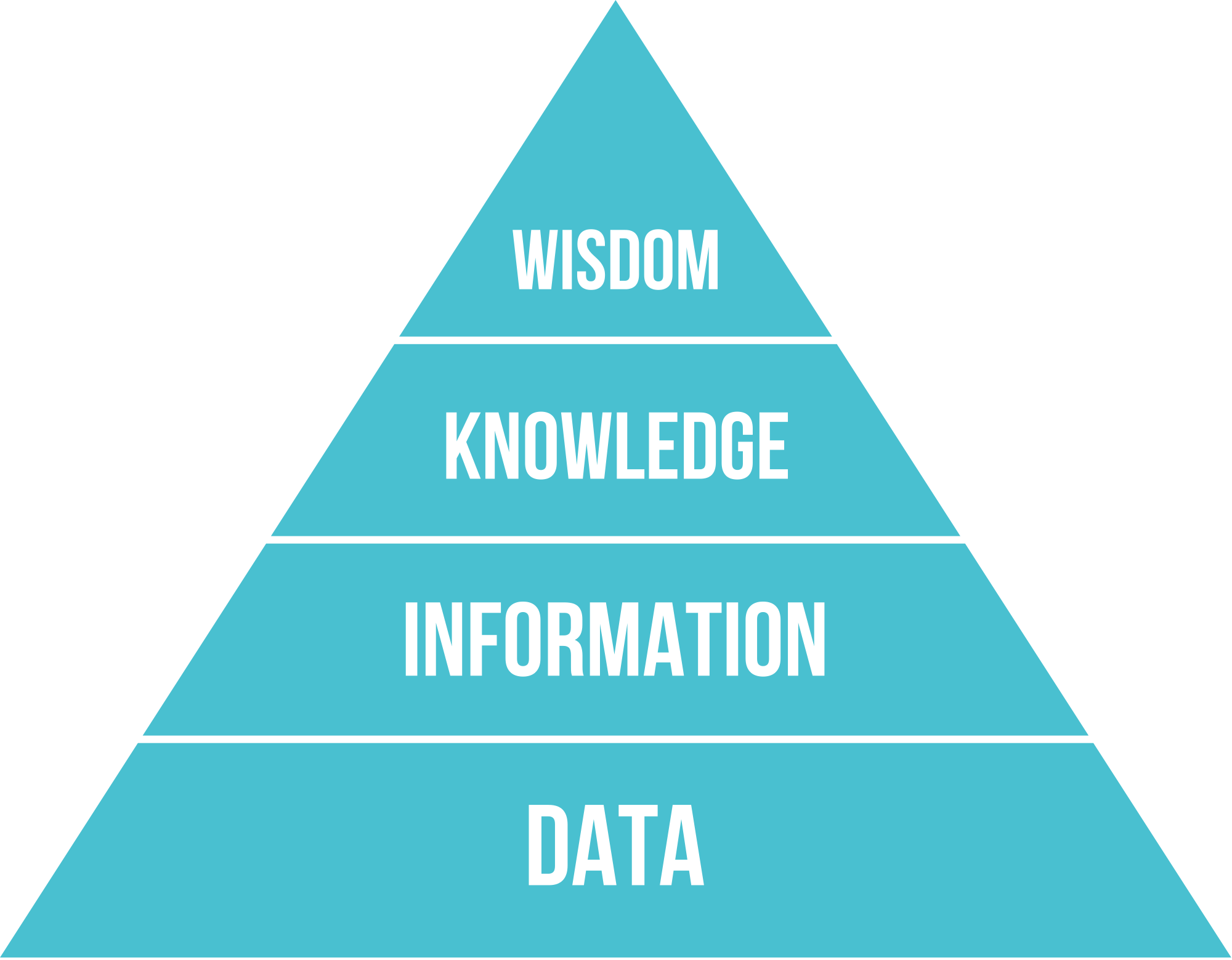
Computers Commiditize Knowledge

30 years ago, the highest paid person in the room typically made most of the operational decisions. A CMO or Creative Director would determine the final language in an ad. A VP Sales would determine the exact language sales development reps (SDRs) would use when calling prospects. HR directors would set employee policies without much employee input.

Today, things couldn’t be more different. CMOs and Creative Directors may set high-level themes for a marketing campaign, but copywriters and junior marketers generate many unique sets of copy and split-test those messages on a small scale first. The best received messages will then be reproduced on a larger scale. Similarly, a VP Sales no longer needs to claim to know any best-practices about cold calling. She can split-test every variable using a tool like SalesLoft.

30 years ago, a VP Sales would never claim to offer a useful opinion regarding visual direction and ad-copy. And a CMO would never claim to guide SDRs through cold-call scripts. The processes outlined 2 paragraphs above couldn’t be more different. But the process outlined in the paragraph immediately preceding this one are identical. In both cases outlined above, the VP doesn’t need to claim expertise in much of anything beyond managing the experiment. The VP can and should defer to what the data says.

CEOs used to rely on expert VPs to make these kinds of decisions. The VPs had decades of experience. The VPs would synthesize all of their learnings and experiences and offer an answer. This process was not unlike the split-testing process outlined above. The only difference was that humans were responsible for processing the results of the experiments rather than computers. Computers are by definition orders of magnitude better at understanding, normalizing, and comparing data than humans.

Now that we have the tools to split-test and measure almost every action we take through computers, VPs no longer need to do this. In fact, they explicitly shouldn’t because they are inferior to computers.

I’m not suggesting that the experience that many VPs bring to the table is worthless. There will always be questions that computers cannot answer: will this person jump ship if they receive an offer for $5K more elsewhere? how can we structure our pricing proposal and presentation to maximize revenue on this $500K deal?

Rather, VPs are moving up to higher levels of thinking and operation. Without the need to worry about as many tiny operational details, VPs can focus on higher level issues to accelerate firm performance.

Each functional area still requires plenty of nuance that is not easily computable. But a lot of the basic questions can be answered by computers. Thus, VPs should be increasingly valued not on their willingness to dictate what should be done, but how they structure and manage experiments to make the best decisions from data. This isn’t to say that data commoditizes all knowledge, but that many facets of what were once knowledge have indeed by commoditized by data. I suspect that in 20 years, the most efficient management teams will operate in ways that we can’t fathom today. As computers offload more of the busy work that today is in the realm of, management, managers will focus on ever higher-order issues and accelerate firm performance even more.

The real question is: when will computers move further up the chain and commoditize wisdom? Is this possible before we achieve general-purpose artificial intelligence?